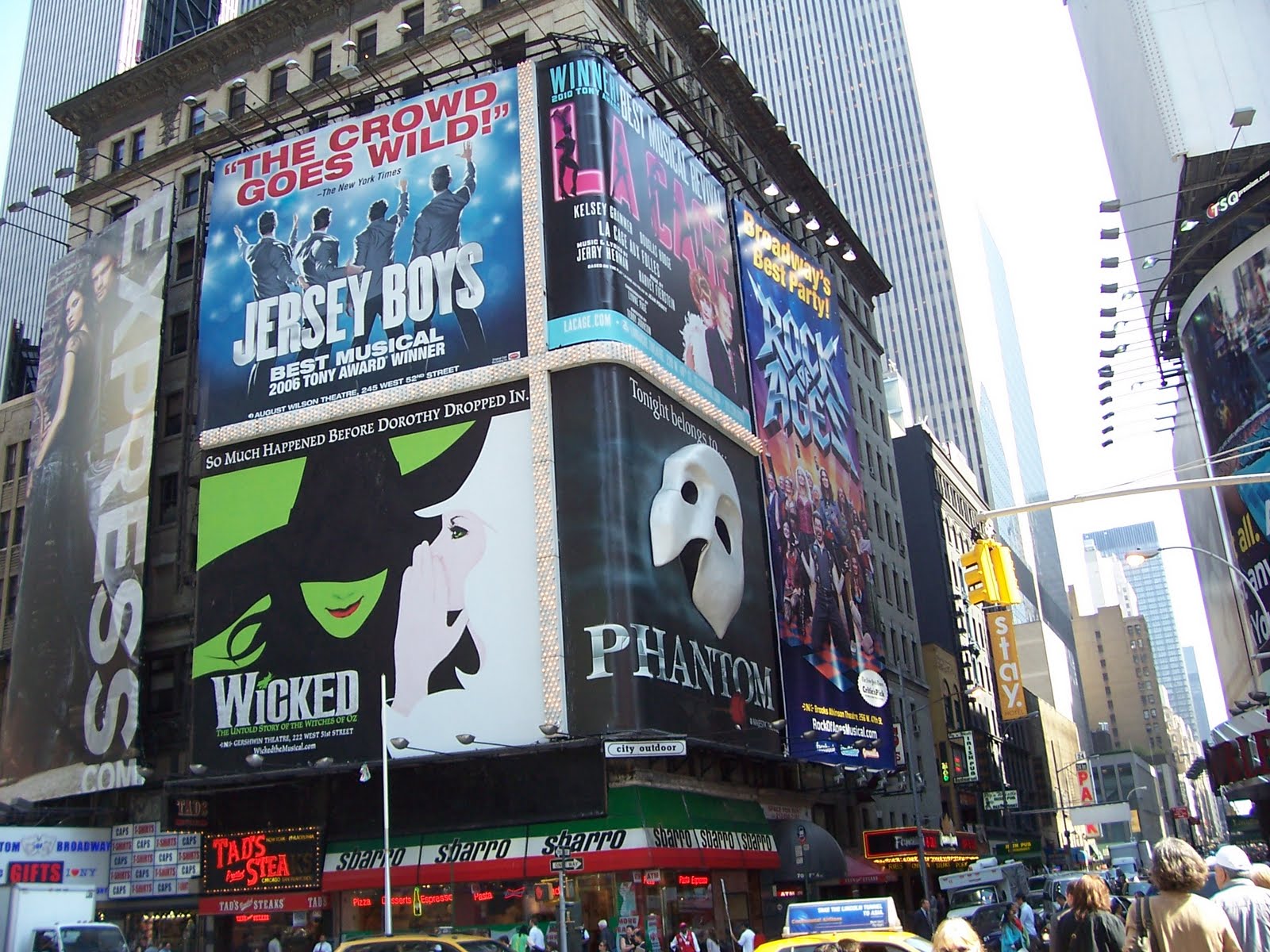
I spent yesterday in New York. Woke up at 4:30 to drive to Providence and take the Amtrak into the city. It's embarrassing to admit, but while I've been to several of the world's oldest, largest, most beautiful, and most famous cities (Rome, Cairo, London, Seoul, Paris, etc.), I've never been to the Big Apple.
I loved it.
It was unlike anything I've ever experienced in America. A world unto itself. If there is glamour left in this country, then surely it resides there, in the city of brownstone and brick, where age, beauty, and (let's face it) violence intermix, and history has not been flattened like so much unwanted baggage. There was grandeur there, reminiscent of the glory (and decay) of Rome.
The purpose of the trip was business -- visit the British Consulate and get my Visa -- but most of the day was spent wandering. Walking through Central Park, exploring Times Square, catching sight of the Empire State Building. And yes, eating a pretzel.
But it sent shivers down my back to know that all the while I was a stone's throw away from places like Harlem and Hell's Kitchen, place names that are evocative of literature and film, broken dreams and distant hopes. New York, like all of Europe, is alive with memory.
I even got to see an Off Broadway show. While it's the West End in London that has really fed my taste for theatre (I've seen over 13 shows there in the course of two trips to the UK), Broadway still echoes in my imagination with memories of my first exposure to Les Miz and my early dreams of being a Broadway singer (never mind that I can't actually sing).
The show itself was an adaptation of C.S. Lewis's Screwtape Letters. A two person show with one speaking role, and one Acting 2 dream part (all movement, and body, and voice). Incredibly well done, Mommy and I were given free tickets by a professor from Carnegie Mellon while trying to get a last minute deal at the ticket window.
We got back to Newport around 11:00, exhausted, sore, and happy.
"He knew that the child was his warrant. He said: If he is not the word of God God never spoke."
My brother described Cormac McCarthy's The Road as being the most brutally hopeful book he'd ever read. I'm not sure I understood what he meant. I assumed, I suppose, that the book would be both brutal and hopeful. And it is. But it is also more than that. It is a book that is brutal in its hope.
On the surface, it seems to be a story about goodness -- human goodness -- in the face of darkness and death. A world gone mad with fear and brutality. A story about a boy and his father, "carrying the fire." As such, the book is powerful, the book is hopeful, and the book resonates, deeply. For who of us does not long to believe that the human capacity for good -- the breath of God inside us -- is capable of overcoming the dark? Of weathering the end of all things? Such truth would be grace enough, it seems. Proof of a loving God.
But McCarthy refuses to end there. He must go further. Must push the boundaries of what we can accept. What we can believe. Must shower his characters with a different type of goodness. So that, despite a world grown old without food, in which humans themselves are the final source of sustenance, his characters do not starve. Their constant luck, in a world long since picked clean, is so beyond the acceptance of realism, that the only answer seems to be in the miraculous. They are being provided for. Ever trudging forward, without reason to expect that anything should be different where they are going than where they have been, they are yet rewarded, like Abraham, for their faith.
And so the foundations of a powerful story are shaken. McCarthy forces his readers to make a conscious choice. Accept his vision, or reject it. There is no middle ground. This is either a fanciful daydream, without relevance in our world of brutal reality, or it is a story -- as unsettling as Old Testament prophecy -- of the active presence of God in our world.
Unsettling, because the question it does not answer is: why him? Why should one child be spared among millions? Why, while one child is baked over the coals, does another love and eat and survive?
The age old question of evil, which has stumped so many philosophers, and agonized the humanitarian minded, is not, I think, primarily a question of existence. It is not the evil itself that bothers us, so much as the unfairness of it all. We don't wonder why there is suffering so much as we wonder why some seem to suffer so much more than others. It is the arbitrariness that goads us, and makes God seem as heartless as the Greek divinities of old.
Yet still McCarthy asks, do we believe the promises? Goodness and mercy that follow us. A future and hope that prosper us.
What, when all is said and done, do we believe about God?
And it is here that my brother came to the rescue. Reminding me, in the words of Aslan, that we are never told any story but our own. This is not the story of the child roasted in the fire, or even the story of those who ate him. It is the story of a small boy, and the father who loved him. If my God is able (and willing) to provide everything I need for life and godliness, surely God is able to do the same for my neighbor, and the stranger I read about in the newspaper, and every other story that God, not I, knows.
It feels safe and reasonable to believe in the goodness of God in the abstract. But it is truth to believe it in the concrete.
On a stylistic note, The Road is written in prose poetry. Beautiful, compelling, and utterly unique.
I used to write "like lists" a lot. They were a way of glimpsing who I happened to be at any particular moment of time. Of inventorying things that were true about me. Where I found my joy, what gave me life. I never thought of them in such epic terms, because they weren't meant to be epic. They were just the small details of happiness. Looking back, I think they were a way of laying hold of the blessedness of life. Of remembering all the ways that goodness surrounded and upheld me.
I bought a new writing notebook a few days ago, and one of the first things I found myself writing was such a list. It's the first time I've done one since high school. I think being here, in Korea, and giving my soul space to breathe, has helped me recover a place in which such details are the truest thing about me. Not the aggravations or frustrations or fears or failures, but the small happinesses -- not large or epic, but quiet and true.
This list is in no way some complete catalog of my life's joys. It's simply the details that came to mind at the moment I wrote it (a few weeks ago now).
My Like List:
- hazelnut coffee in happy mugs
- Mushishi episodes that touch on mystery and longing
- midnight talks with my best friend, who also happens to be my brother
- a good book, and long lazy hours in which to read it
- listening to books on tape while packing, enduring migraines, or falling asleep
- experiencing art my brothers created
- filling hours with projects I set myself to accomplish
- watching the World Cup with Brits
- beer and cider
- winning something on the Wii
- knowing a friend is reading what you're writing
- Farah's moments of languid contentment
- eating Dip-n-Dots by lake Umpa
- being given a duck loofa =)
"And I trust for him that everything he is doing has to be done. This is our life."
My brother and I watched Into the Wild last night. It's a movie that makes one long for life, and the courage with which to really live. Since the movie first came out, I've been a little afraid to see it. Afraid of the ending I knew was coming; afraid of the sorrow and loss. But this isn't a movie about death, it's a movie about life. About truly experiencing the moments we're given. So that even at the end, when a 23-year-old boy dies alone in a bus in the middle of the Alaskan wilderness, it's hard to experience anything other than joy. Joy and longing. And maybe pain for the people he left behind.
When Chris/Alex finds the "magic" bus, near the start of the film, I was overwhelmed by the sense of what G.K. Chesterton calls treasure. The experience of being a castaway on an island where a shipwreck washes up, and every ordinary, every-day item becomes something precious to be cherished, rather than scorned. In his book Orthodoxy, Chesterton speaks of loving Robinson Crusoe for this reason, because it reminds him of the true nature of life -- that everything is treasure. And I long for that right sense of things and their worth -- a worth that only seems graspable when one owns nothing, and therefore has nothing to lose and everything to gain. The delight that sees the world as precious.
It's a truth I knew well as a child, when torn pieces of cloth, abandoned on the sidewalk, could hold my imagination for hours.
The hardest part of the film for me to reconcile is the story of a sister left behind. She says, in one of her many moments of narration, that unlike her parents, who have been purposefully cast off, she receives no word because he knows she doesn't need it. He knows she loves him enough, and is certain enough in his love, to live on in his absence.
Is that the great secret of existence, in this world of separation and loss? The great test of truth? That there are relationships that flounder and die with distance, but real love, as Charles Williams might argue, knows no limits of space or time? Ruth Haley Barton, in her book Sacred Rhythms, says that the life-giving significance of solitude is that it allows us to experience the reality that all things "irreconcilable are somehow reconciled through Christ. Everything is already one through the person and work of Christ in the timelessness that is God." Ultimately, God holds the presence of those we love within God's self, and when we are with God, the perfect Wholeness, separation is impossible. This may seem like spiritualist mumbo-jumbo, but I think the opposite may be true -- that it is simply spiritual truth, that we are often too earthbound, and transient, to experience. But when we live truly, and cease sheltering ourselves from the present moment and the God who indwells it, I think all physical boundaries must burst.
Not sure why I didn't post this when I actually WROTE it (considering it was actually relevant then), but that seems to be one of the things I do: write, but don't post.
___________________________
This is it. Nearly five months of rehearsal, and tonight we perform.
And I am nervous. Very nervous. Isn't it the performers who are supposed to be nervous?
I wonder if every director feels like this. So . . . responsible. But yet, incapable of doing more. The play is now out of my hands.
May it bless those who see it.
___________________________
I always planned to write more about the play. How it went, what it was like to direct, the things I learned and liked and hated. But, as so often happens, it was too soon, too raw, and then it was too late. The feelings slowly fading into that strange haze of past life.
[the lovely ladies of the cast, minus Olivia and Viola --
left to right: Maria, flutist, Fabiana, Valentina, and Curia]
Suffice it to say, it was one of the hardest things I've ever done, stretching me in ways I didn't know I could stretch. At the same time, it was one of the best things I've ever done, and the most enjoyable (easy to say, looking back, now that the stress/tension/terror is over). I'd never experienced anything like it before: sitting in the front row, watching something you created come to life without you. I've always been on the acting side of theatre, participating in the art, but never experiencing it in its fullness. And it was . . . profound? It seems too arrogant of a word, but the meaning is about right. It was like watching a miracle take place. Things happened on that stage that I never would have believed possible. After all of the hard work, pressure, tension, and tears, it was like a taste of grace.
[working with Viola, a freshman with immense dedication]
And I was so proud of everyone. My actors, shattering the limitations they set for themselves. Being bolder, and braver, and better, than they thought they could be. Than I thought they could be.
I love Charles Williams' books. Everyone who knows me knows this. Others may think them strange or obscure, but I find them pulsing with life and power. They remind me, in language that transcends knowing, what it is that I'd forgotten I'm looking for.
Honestly, though, I didn't know what to do with this book. Normally I like Williams' ambiguity -- I think it's part of his stories' power. I wouldn't say that I DIDN'T like it this time, only that it left me perplexed and confused, shaken and unsure.
Is Considine an antichrist or a returned messiah? Does it even matter? To some degree, it seems irrelevant to the story's point. A story that is about living in an ambiguous world, where no morality is certain, out of the necessity of your own being. Living the life you have to, in the face of the choices you can't control.
The problem with this is two-fold: 1. Is evil and goodness truly such a matter of relativity? Is physical action, such as murder, truly irrelevant if the perpetrator burns with what, for lack of other words, seems terrifying similar to the Joy of the Lord and the Glory of God? And while it's easy to thrust this back into our black and white understanding, and declare "NEVER!" what do we do with those Old Testament passages in which the prophets, and the God that they serve, seem to burn with just such joy, and act with just such a terrifying mix of innocence and violence? 2. Most of Williams books, the scholars agree, are ultimately about coinherence -- the beautiful mystery of unity. What does one do with a book, thrust in the middle of this collection, that seems to be about the necessity of living first and foremost for oneself? Of turning everything that is experienced inward, for personal power and gain? And the one antithesis to this -- Isabel who lives only for the other -- encourages her husband down its path, because it is what his soul craves. Yet if he were to succeed in his quest, it would separate him from that which makes him whole.
Who is the hero, who the villain? Who's path is righteous, who's selfish? Who makes the right choices, who the wrong? And what ending are we supposed to hope for? Williams doesn't tell us, and sometimes I wonder, does God?
I have decided to write a bucket list. I may seem a little young for this endeavor, but one never knows what the future may hold. Besides which, life is just so SHORT. And I want to really live.
This is in no particular order.
1. Live in a commune, surrounded by sun and the presence of friends. To learn how to dig in the earth and grow bright red tomatoes and shiny green spinach. Write poetry in the presence of growing red roses.
2. Spend a year in a convent. Work with my hands, give glory to God. Seek peace in silence and solitude and the rule of community. Live within the beauty of stone walls.
3. Write a novel. Find a story that burns in my spirit, and forces itself to be told. Capture reality within the gently rolling letters of the English alphabet.
4. Work in an orphanage, in India. Let the complex and tattered world fade away, until there is nothing but the sacred, simple, and profound duty of loving, and holding, a child.
5. Get a masters in dance therapy. Chanel my love for dance into a healing art; help children remember joy.
6. Adopt a child. Or seven. Share what I've been given with those aching for a home.
7. Get a D.Phil. at Oxford. Spend long hours in the Bodleian library. Live amid the aged stone, the coffee shops, and the books.
8. Get a masters in theology and the imagination from St. Andrews? Unsure about this one, but it seems appropriate to the study of Charles Williams.
9. Spend six months to a year on the Oregon coast, taking long walks on the beach, sitting by the fire, and writing intensely. Convert to polyphasic sleep.
10. Teach at Fox? I'm not sure that teaching is really my passion, but there are some professors who'd I'd do anything (well, almost anything =) to work beside.
11. Visit Iona.
12. Live in Jerusalem.
13. Rent a flat with some friends. Have afternoon tea, and artsy decor on the walls.
14. Teach in Korea, because, well, why not?
15. Find someone to travel the world with. Someone who understands the conflicting currents that run through my soul. Who longs to live a life of compassion and is unafraid of the unknown. Someone who wants a partner and not a picture. Marry that person. Love them forever.
Kohleun just introduced me to the song "I am not my hair" by India.Arie, the themes of which are close to my heart. It may seem like an obvious message, yet there are moments when I feel like the whole crazy world just doesn't get it -- and that it's the most important message we can hear.
It's not just about hair, obviously, but all of the ways in which we're required to live up to expectations and imagined reality. All the ways we're required to hide our true humanity.
I wrote "Bare" for a creative writing class a few years ago. It was a semester of intense angst centered around this subject, and I almost shaved my head over Christmas just to prove a point.
Some people have been offended by this piece, but please don't be. It's not meant to be taken analytically, as an absolute profession of belief, but as an experimental attempt to capture something that I've experienced. And that I long for. As I've said elsewhere, "I think, through this, I was trying to touch on the issue of pain . . . devastation . . . war . . . and the way our society hides from those things. From the reality of sweat and blood, behind the facade of perfection. I believe in beauty, but it is a very different type of beauty than the ideal my culture is trying to force down my throat. It is a beauty that comes through the ashes—the marks of living—rather than by denying them."
Bare—An Ode to Beauty Bald
I want to shave my head. It’s one of those crazy ideas that terrify my parents. They interpret it, I think, as a sign of my slowly dissolving faculties. The warping of my brain by too much study and feminist theology. After all, why would anyone want to destroy all sign of womanly beauty? The golden ringlets that grew into longer curls. Shear them off in humiliation and shame.
I try to explain. How a boy I liked, once told me that he liked my hair. Liked it down. Said it made me beautiful, those strands of tarnished gold. Strands that are not me.
And I rebel. I will not be my hair. I will reclaim my womanhood from a Bible that proclaims me, and my head, to be man’s glory.
I want to be known for the mind that lies beneath the hair. For the part of me that thinks and yearns and ponders. For the passion and the life, under the meaningless wisps that grow and die, without my consent or say-so. That require nothing of me. Reflect nothing on me.
I want to shave my head in honor of those who never had the choice. In solidarity with the broken. The women at Bergen-Belsen and Dachau. Auschwitz and Buchenwald. Those who survived, and those who didn’t. To honor a humanity that was not taken, cannot be taken, with our hair.
To celebrate survival. From cancer. Leukemia. Radiation and chemo. The women who wear headscarves, and wigs. Afraid to show the scars of battle. The sign of loss, and life. Proof that they’re still here.
I want to join the ranks of men like Yule Brynner and Michael Jordan. Of human beauty unadorned. Skin, and sweat, and age. Unafraid to expose the blue veins that pump life, blood and oxygen, through membrane and golden tissue. The sandpaper texture. The shape of their skulls.
I want to demonstrate a different kind of beauty. Sleek and sexy elegance that denies hairspray and color dyes, styling products and curling irons. Proclaim freedom from magazine images and picturesque perfection. From Barbie dolls and Disney princesses, long silken tendrils, hair to their knees. Coiffured and flowing expectations. Stop hiding beneath the mask of color.
I want to wear henna on my head. Make patterns of tribal beauty. Declare myself at home with earth and sky.
I want to stop running from the feel of my own skin. I want to be myself, free of pins and clips and rubber-bands. And I want to love it.
I want to inhale wind and rain through the pores on my skull. To taste life and pain. To deny the acceptability of pretence, to destroy the masquerade, the papier-mâchéd perfection. To mourn injustice with the women of Beowulf—heads bare, weeping to high heaven. Sackcloth and ashes, and shorn hair.
And most of all, I want to be a nun. Set apart for unreserved worship. To return to child-like innocence, and feel nothing between my head and God, but air and sunlight. To be uncovered before my maker, not in shame, but in the humility of a newborn, and beloved, child. To remember my humanity in the presence of a genderless God. A God who created my soul before she created my hair.
I want to feel my prayers rise out of the top of my skull. Float along air currents. Be breathed in by the Almighty (hairless) God.
"And I began to see things in a way that let me hold the world without me in it."
I'm sitting in the Hong Kong airport, waiting for my flight to Jordan, having just flown from Korea on a very nice Cathay Pacific flight. With an individual screen, and lots of film choices, but only time for one movie, I decided to go with Peter Jackson's The Lovely Bones. And I was favorably impressed.
It seems odd to describe a movie about murder as beautiful, but I'm loath to describe it as anything else. Peter Jackson has created a haunting paradox -- a movie about death (and not the peaceful, innoncent kind) that is nothing less than a celebration of life. There are dark moments in the film, to be sure, but the overarching impression is one of light and love. The picture I'll carry with me is of a laughing family, with deep roots and strong ties, fierce in their love and strong in their courage -- the kind of family I want to have.
In the end, I think Jackson is able to take a horrific sort of death (the kind that has haunted my nightmares since childhood) and show that really, in all the ways that matter, Suzie dies the best sort of death (if any death can be good), because she has never spent a moment surrounded by anything but love. As someone states in a different movie I watched recently, "Our finger prints don't fade within the lives they touch." In other words, the Salmons are no less a family after Suzie's death than they were before it. Her place is permanent, and (to quote e.e. cummings) they carry her heart with them.
On a side note, the storytelling perspective is interesting in that it's narrated by Suzie after her death. One of the reasons I was interested in watching it in the first place was that I'd read a review of the book which described it as a 'post-death coming of age story'. Suzie is in every way the protagonist -- a protagonist who must deal with the ending of her idealic childhood, though the cause, in this case, is not growing up but murder. A protagonist who must learn, as we all must, how to hold on to everything that matters (like family and love) while coming to grips with the inevitable changes in herself and the world around her.
And as a final note, I may have watched the film on a bad quality airplane screen, but even so, some of the scenes are absolutely gorgeous.
2. The Gunsan lake, with its bridge of lights and happiness (with special orbs to promote love and dreaming).
3. The shoes. Definitely the brightest, craziest sneakers I've ever seen (think fluorescent yellow, shiny, and huge). But they also love their high heels, which are tall, and not at all the standardized American variety.
4. The red roses that spill over every fence.
5. The uniquely poetic way of using English: "provincial tangible cultural asset."
6. Chicken on a stick with amazing barbeque sauce. Street food at its finest.
7. The "couple sets" -- i.e. his and her matching clothing, drinking straws (because drinks are meant to be shared, not experienced alone), chopsticks, watches, and just about everything else you can think of.
8. Jordan and Marisa's bunny, Faraday, who is very inquisitive, and seems to think Brendan and Thani are boy bunnies.
9. Korean pizza -- some of the yummiest I've ever eaten, with sweet potato crust.
10. Green tea popsicles.
11. Shaved ice desserts, with ice cream, whipped cream, strawberries, shaved ice, cornflakes and fruitloops. Odd sounding, delicious tasting. As an added bonus, you get to eat them while swinging in rocking chairs.
12. Strangers who invite you to share in their picnics, and offer you food at the side of the road.
13. Open rooms with wood floors in which to take naps.
14. Traditional teahouses, with inner courtyards and low tables, even if they do charge too much for tea. =)
15. Biking around islands where seafood is eaten raw or dried on clotheslines in the sun.
16. The culture of open spaces, bare feet and ground sitting, where pouring water requires respect, and giving and receiving is a ceremony of significance.
17. And, of course, the very best part: seeing family. =)
Was Julian of Norwich in any way representative of medieval women as a whole?
Does an understanding of Mary Wollstonecraft's life aid or hinder an appreciation of her works?
Was there a specifically feminine contribution to the corpus of war writing?
Discuss the representation of alienation, isolation and the feminist consciousness in Mrs Dalloway.
What, if anything, is going on in To the Lighthouse?
Discuss the issue of male and female perspectives as Virginia Woolf understands and portrays it in Orlando.
Discuss the significance of chaos and shape in The Waves.
Discuss the idea of established 'male' values vs. 'female' values in A Room of One's Own.
How do Woolf's writings (specifically Three Guineas) engage with politics and creativity?
To what extent does Virginia Woolf’s criticism develop and reflect a holistic theory of writing?
What revolutionary ‘position and outlook’ do you get in relation to Virginia Woolf’s situation in life as depicted in her biographies?
In the Iliad, what is the role of the gods?
In what ways are Oedipus Tyrannus and The Bacchae tragedies according to Aristotle's Poetics?
Is the Aeneid a straightforward eulogy of Rome and its empire, or does Virgil keep his poetic integrity?
Discuss the “life of love” created by Catullus, Horace and Propertius.
In what ways does, or should, an understanding of historical context affect our interpretation of Euripides’ Medea as a positive or negative portrayal of women?


 The purpose of the trip was business -- visit the British Consulate and get my Visa -- but most of the day was spent wandering. Walking through Central Park, exploring Times Square, catching sight of the Empire State Building. And yes, eating a pretzel.