Showing posts with label theatre. Show all posts

Monday, April 4, 2011

Holiday on the Island

I am back at Oxford, after ten days of being filled with coach travel, Scottish treats, ocean views, and the laughter of friends.

I'm hoping that all of this fullness will spill over from my spirit into my writing, and that I'm ready to hunker down to four weeks of academic rigor as I prepare my option and theory essay for submission, and an outline of my dissertation for presentation to my adviser.

But that's tomorrow's worry.

Today I am full of migraine medication, sleep, espresso, an almond croissant, and bright memories.

Amberle, one of my good friends from undergrad (though how exactly we became friends is a bit of a mystery), flew in the Wednesday before last, the day after I sent off a rough draft of my theory essay to my supervisor.

I went to Heathrow to meet her, brought her back to Oxford, and then proceeded to drag her on a several mile walk through the city, and out to a country pub that (rumor has it) Lewis used to love.


We were attacked by a goose on the way.

Day two involved a visit to the Bodleian, and a very long walk around Magdalen's dear park, into the fellows' garden, pictures on their bridge, and more attacks by rabid killer geese, who flew at us, proceeded to follow our every move, glared daggers, and only allowed us to pass if we hid behind groups of elderly women.

I know he looks innocent, but don't be fooled.
Such excitement.

We also ducked in to Univ (University College), where Lewis did his undergrad, to pay our respects to the Shelley memorial.

And, of course, we paid homage at the Eagle and Child, the Inklings' pub.

Day three was an early morning into London, a stop by Leicester Square to purchase theatre tickets, and a London Walks tour of Westminster Abbey and the changing of the guard.  A Pret lunch at St. Paul's (somewhat of a tradition at this point), a meander across the Millennium Bridge, and a tour of the Globe, as well as a rather exciting hunt for the location of Shakespeare's actual theatre.


They were rehearsing Twelfth Night while we were there, and I couldn't help thinking, That's my play, when I heard the monologues.

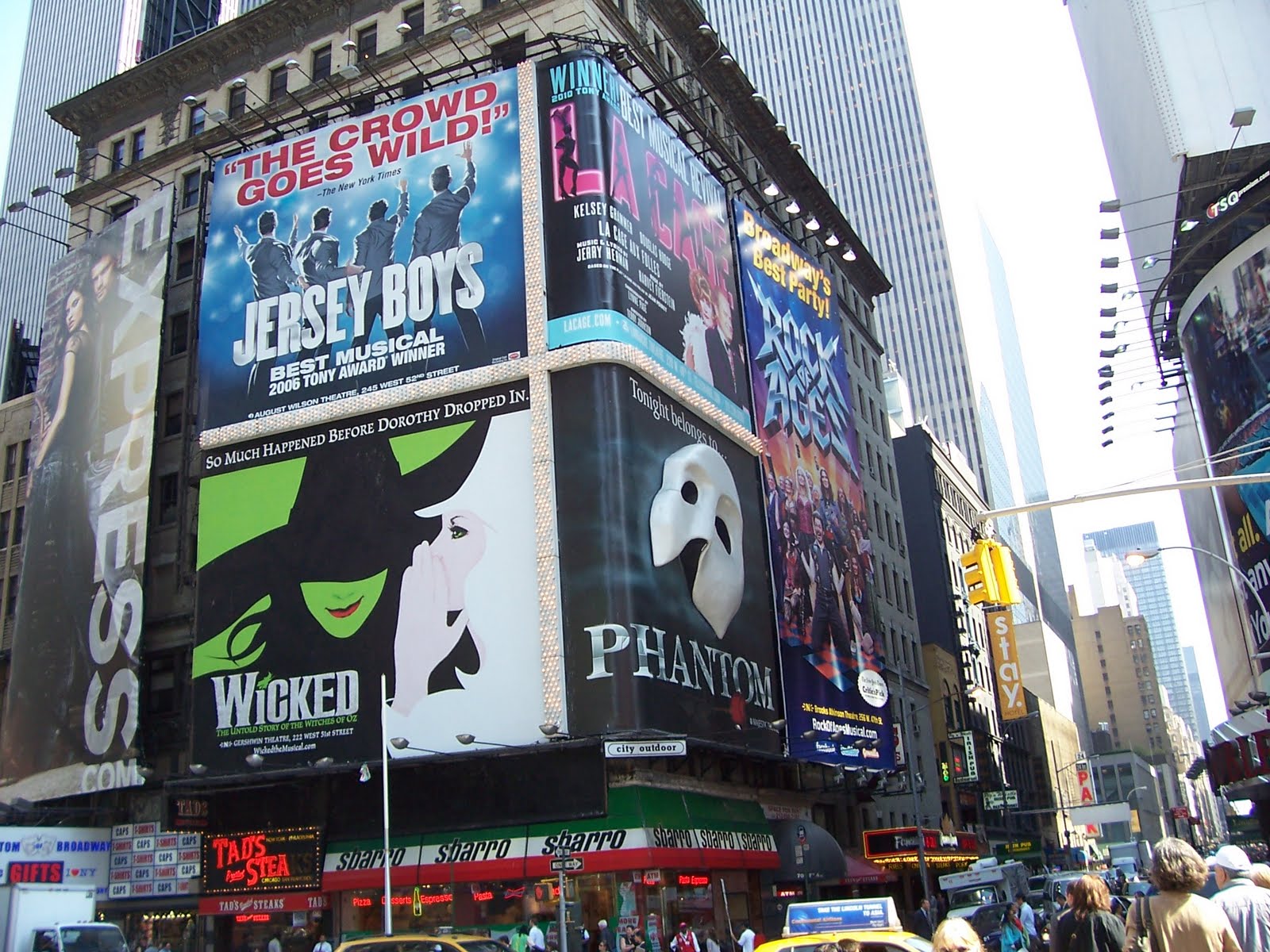
Dinner back in Leicester Sq., and then on to The Phantom of the Opera, my third time seeing it, but the first time in nearly eight years.  We were in the last row of the highest balcony, but the singing was wonderfully powerful, and the actress who played Christine gave a uniquely shattered performance – this was not an enamored singer, horrified by a view of ugliness (as Christine often seems to be played – the horror and resistance coming after the phantom's face is seen, not before), but a manipulated and vulnerable child, caught, from the beginning, in waking nightmares she can't escape.  The perfection usually required of Christine's voice gives her character a false sense of control, I think, but this Christine allowed her anguish to affect, and even distort, her music, so that, while she rose to tremendous heights (sometimes despite herself: sing my angel of music!), she also faltered and broke.
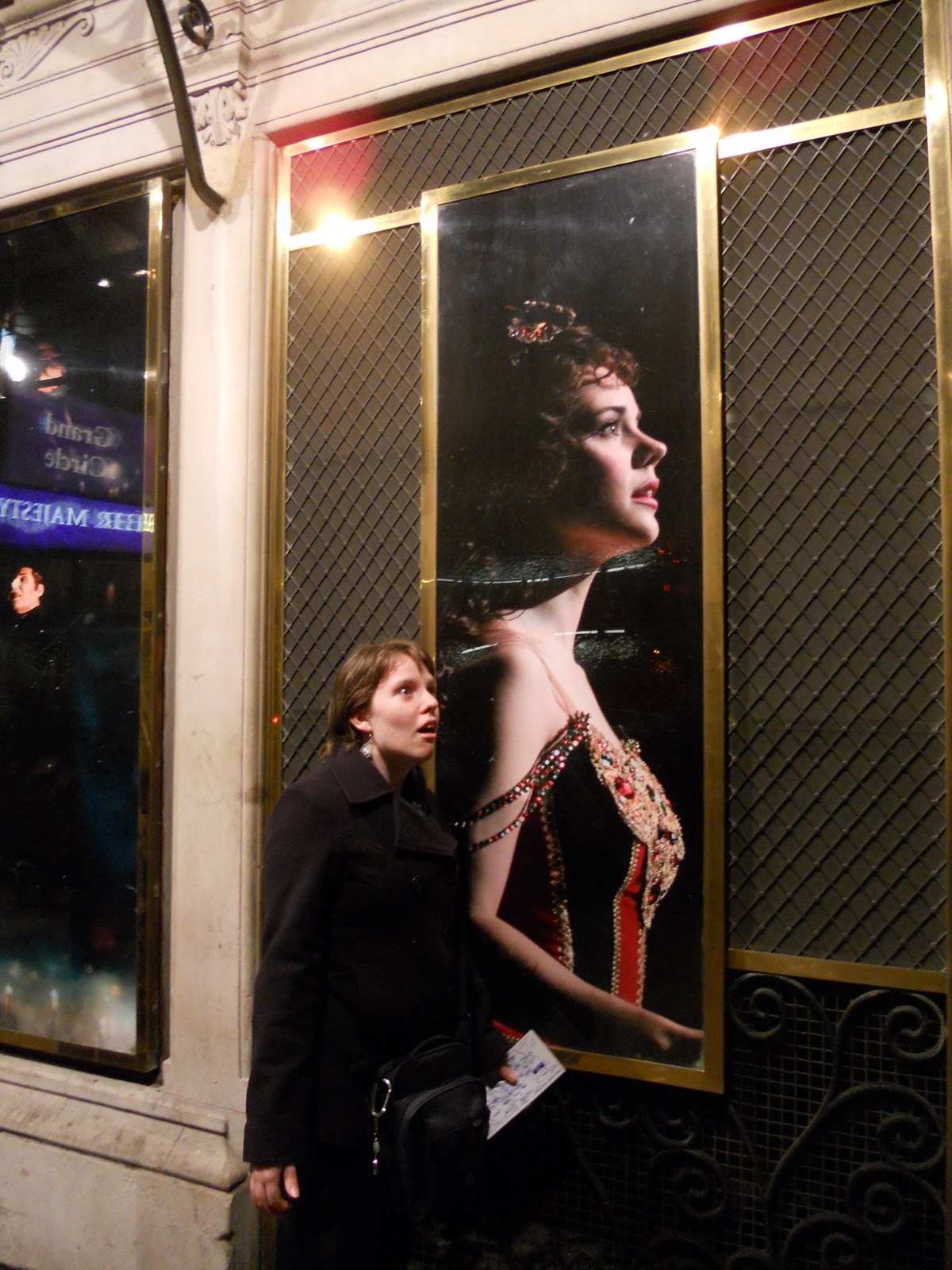

And hearing the music sung so well, I was reawakened to the reality that the movie, while a fun celebration of color and pageant, simply falls horribly short on vocals.

Back late, late, late to Oxford, and then packing, getting one hour of sleep, and returning to London to catch the coach to Scotland.

Visiting Kohleun in her beautiful house, with gardens and windows and flatmates with whom to drink coffee, and exploring St. Andrew's with tea crawls and trips to the sea.


Then, on Tuesday, a day in Edinburgh before heading to Cumbria for walks in the Lake District and time with the Doubs – dear friends from days in Egypt.


And I left my heart in a used bookstore where 80-year-old copies of Virginia Woolf's books dwell – but despite painfully cheap prices, there is no room in my suitcases to indulge my adoration.  But I did purchase a 100-year-old calf-skin bound copy of Milton's collected works, using my dissertation as an excuse.

Then back on a Megabus coach (crowded and stinking of urine) to trek down the country to London, and then home to Oxford.

And now I am alone again, with my books and my laptop, preparing to throw myself into research and writing, and wondering if the day will ever come when I have a home to fill with beautifully aged books, and long hours to write for joy and not for degrees, and days to see friends who do not live half a world away.  How I envy Wordsworth his sister and his Coleridge and his writing cottage in the Lake District, yet we must each live our own journeys, and mine, I am afraid, will always be torn between countries and continents and missing faces until the day when all things are made new, and wholeness swallows up the jagged separations.

Until that day I must, with the king and queen of Perelandra, bid my farewells until we pass out of the dimensions of time, and wish the splendour, the love, and the strength upon us all.

Friday, March 18, 2011

Cressida: "the nonsocial, nonpolitical, nonhuman half of the living structure" [Cixous]

Here's a reflection I wrote on the 2nd best play of the term, Troilus and Cressida.  Somehow I failed to post it (I really need to stop doing that).  
_________________________________

I went to watch Troilus and Cressida last night (Feb. 8th), with a group of friends from college.  It was a student production, playing at the same theatre where I watched The Last Five Years in the fall of 2008. 

And, once again, I left the theatre shaken. 

I had never watched, nor read, Troilus before, and so had no idea what to expect.  I knew it was, on some level, about two lovers in the midst of the Trojan war, but I didn’t know that it was also, much more forcefully, about the dissonance between the heroic world of warrior men, and the women’s realm they took for granted and violated without notice. 

Never having read the text, I’m unsure how much of the theme’s prominence was due to the original and how much to directorial choices, but either way it was a powerful (and sickening) depiction. 

From the beginning, women, clad in silk nightshifts (for the Greeks) and adapted Grecian togas (for the Trojans) set up the space – space that was then vacated of female presence (or, in the few cases that women remain on stage, active female presence).  Initially, I found the costume choices jarring, not least because of the dissonance between the semi-historical Trojan dresses, and the modern military attire of the men.  But as the play wore on, I came to appreciate that dissonance as a symbol of the utter separation of the two worlds.  As Kim (my  flatmate) pointed out during intermission, she disliked the costumes because they made the women vulnerable, and these “were not vulnerable women.”  But I think that was the point.  They make the women vulnerable despite themselves—barefoot in a world of boot-clad men—as the play goes on to graphically demonstrate that they are. 

But where I first truly grew uncomfortable (and began to sense the direction the play must be going) was in the “joyous” scene where Troilus and Cressida finally come together and swear their vows, and where Pandarus declares that if Troilus is true, let all faithful men be named Troilus, but if Cressida is false, let all faithless women be called Cressid.  She cannot be honored for a faithfulness that is expected of her, only dishonored by betrayal. 

And, of course, the injustice of this curse is staggering.  For women are not granted choices in a time of war.  They are treated as property, not beings with agency, yet they are still judged by adherence to ideals they have no choice in upholding (or violating). 

And so it is that Helen is talked about in all male-councils, bargained with as a possession that will increase or decrease male honor, and kept or given away on this basis alone. 

So it is that Cressida is traded to the Greeks, while Helen kept, because giving Helen back (despite general consensus that she is a whore without worth) would lessen Trojan honor, proving that they could not keep what they had stolen.  So Cressida is traded in order to return a captured Trojan (male) and uphold Trojan (male) promises. 

And Pandarus weeps, not for his niece given to the enemy, but for the boy who loves her, for this, he is sure, will destroy him.  It would be better, Pandarus declares, that Cressida had never been born than that this separation pain Troilus. 

And while Hector is welcomed into the Grecian camp as a brother in arms, worthy of honor despite the hundreds of deaths he has caused, Cressida, innocent of shedding a single Grecian’s blood, is met with sexual and physical assault. 

And, of course, Troilus sees her with Diomedes and judges her by standards of strength and choice she does not posses. 

Meanwhile, Andromache's pleas that Hector remain at home are received with the declaration that she is bringing him dishonor, for he has given his word that he will fight that day.  Never mind that Hector’s death, and Troy’s overthrow, will mean the enslavement of his prophetic wife and sister.  No, it is masculine honor at stake, not women’s freedom. 

And Achilles, who has promised his Trojan love that he will not fight, breaks his word to the woman in order to honor his love for his (male) companion, Patroclus. 

And the play ends with the Trojans singing, in the face of Hector’s death and Troy’s doom, of the honor for which they will be remembered.  And the women, weeping, sing with them – despite the knowledge that they have no part in the heroic deeds that will be passed down in memory, and will, instead, outlive their men to die in captivity and enslavement far away from home. 

And it makes me rage, because they simply don’t get it.  The men, with their honor and their male bonds and their realms of action and decision, do not understand the cost.  They break no promises, and are therefore innocent.  And, in their own way, so breathtakingly, fragily, beautiful.

The play itself was well acted, especially by Pandarus, Hector, and Thersites -- the wretched fool -- played by an actress with incredible physical control.  Cressida fidgeted too much, and though I understand the intention behind filling her with nervous energy, the movement was generated by the actress, not the character, and therefore distracted from the imagined reality, rather than adding to it.  Overall, Cressida, as a character, was not portrayed as overly sympathetic (this is not a girl I'd particularly want to know), but then I kind of think that's the point -- she doesn't deserve sympathy because we like her, she deserves it because she's just an ordinary human girl who's been wronged.  And thanks to some pretty impressive directing, the fight scenes, rather than being half-hearted and corny (as I feared they would be) were stylistic and interesting -- feeding the actors' energy and our own.    

Wednesday, March 16, 2011

"Medea I will become"

They huddled together, a mass of breathing, heaving, humanity: women, sibyls, witches, spirits, chorus, fates, woman.  Medea.

Medea unveiled.  De-masked.  Fractured, powerful, dangerous, vulnerable, mourning, mad, screaming, agonized, laughing, victorious, deadly.  Each of the actresses, both Medea and not Medea.  Medea as she becomes, Medea as she was, Medea as she is not.


By far the best play of term, it held us in its grasp for only fifty minutes.  A bare stage, a flurry of movement, a wailing, cacophony of voices.  It embodied the chaos of a conflicted soul, a woman torn between her choices.  This Medea was not guilty or innocent, evil or good, justifiable or monstrous, woman or demon, but all at once.  This Medea was the raging presence of all her sins and all her virtues -- her past guilt and long forgotten innocence.

It was a Kristevean revelry in the rage, rhythm, and passion of the chora, yet created from its chaos meaning that crystallized like diamond, digging deep.

And at its climax, splattered with the blood of a torn child, Medea stood, gloating in her furious, avenging glory, and crouched, shattered with grief, agonizingly gentle as she gathered the torn pieces of her once-breathing child. 

Here's a link to a brief clip from the play.

Friday, March 11, 2011

Oxford, London, Stratford: Theatre in 2008

So, I do realize that this post is more than two years too late.  But better late than never, right?  So here is a look at the shows I saw the last time I was in Oxford, partially recovered from an unpublished post, and partially written looking back from the present.  I have to say, I may have only been here for a semester, but I saw some fantastic theatre. 


I went to England about a week early, to have some time to hang out with Kohleun before school started. We spent some time in Scotland (in a B&B on the coast -- so beautiful), a couple of days in Carlisle with one of my best friends and her family, and then our last day in London. We walked around in Leicester Sq., ate lunch in front of St. Paul's (and waited for my migraine to go away), took a double-decker bus past parliament and Big Ben, visited the Tate Modern, took pictures in front of Shakespeare's Globe, and ate in a pub. Then we did what everyone must do when they visit London: we went to a show!
 
Specifically, we went to see Chicago. It seemed like an appropriate choice for a girls' night out, and all our other picks were a bit out of our price range. Although the storyline isn't my favorite, it had great dancing (better and more often than the film -- with the exception of Billy's role [after all, how can you beat Richard Gere tap dancing?]), and the woman who played Zelma was great. We also enjoyed Roxie's: "Think big Roxie! I'll have lots of boys!" (maybe it was one of those moments that you had to be there for . . . ).

Then, when Mommy came to visit, we went to see Wicked. I'd seen it once before, with a good friend in the States, but I really wanted to share it with her. It's a great show. Everything a musical should be. =)


Then, my amazingly talented older brother secured us seats to the sold-out production of Ivanov, with Kenneth Branagh! It was amazing. Definitely one of my life dreams fulfilled. I've wanted to see Branagh live since I first saw Much Ado About Nothing when I was nine.

That weekend, Jordan, Marisa, and I went to see Blood Brothers. Jordan and I had seen it before, in London during his senior year of high school, but it's one of our favorite shows, so we were really excited about seeing it again, and sharing it with Marisa. It's an incredible combination of music, story, and acting, and is known for reaping standing ovations -- every single night.

 
That next weekend my dad was in town, and we took a chance on a show neither of us had ever seen (or really heard about): The Lady in Black.  Turned out to be one of the most incredible pieces of acting (and remarkable shows) I've ever seen.  The crazy thing about the play is that it's meant to be scary . . . and it is.  I'm pretty sure I even remember people screaming.  Yet there are only two actors and a few boxes on stage.  Everything else (other than a few well-placed light and sound ques) is pretty much in your head.  An incredible exploration of the limits (or non-limits) of the medium.  Yes, you're constantly pulled back to the realization that you're sitting in a theatre seat, watching an empty stage with a room full of other people, but the remarkable thing is that there are moments in which you forget.

I saw The Last Five Years (which I've written about elsewhere) in Oxford with some friends, and Zorro by myself in London to celebrate my first completed tutorial.

And then there was Stratford.

 
During the first few weeks of our program, a visiting lecturer talked to us about Shakespeare.  An expert in her field, who had talked and laughed with the likes of Sir Ian McKellen, she informed us that Shakespearean history was being made at that very moment: the Hamlet of our generation was being performed in Stratford-upon-Avon.  She said it was the performance future students of Shakespeare (actors and academics alike) would study, and that whether we had to beg, borrow, or steal, we had to get ourselves there.
 
Easier said than done.  
 
Needless to say, it had been sold out for months, and without my brother's awesome eBay skills we were stranded . . . almost.  Luckily for us, the RSC believes in student tickets, and they reserve ten, priced at five pounds each, that can only be bought on the day of the show.  So we did what any committed fans would do, we jumped on a bus down to Stratford, pretended to be hobos in the RSC courtyard, spent the night shivering in the rain, and secured our tickets bright and early the next morning.


It was incredible.  The show, and the experience.  There was a matinee of A Midsummer Night's Dream on the same day, so we went to that too (also for five pounds).  Never my favorite Shakespeare, it was nonetheless excellently executed, and since the RSC is an ensemble, it was fascinating to see the actors perform such different roles.

Hamlet itself was nothing to look at.  No spectacle (other than a cracking mirror), on a nearly empty stage.  Which simply highlighted the fact that the acting was phenomenal.  I have never been to a show (especially a Shakespeare) where there was so little confusion over language.  Every line was pristinely clear, and not because I'm overly familiar with Hamlet (I'm not), but because the actors connected every line so irrevocably to intention and thought.

And who were these actors?  Only the incredible Patrick Stuart and incomparable David Tennant (who, I have to admit, I had never heard of before the play, but I quickly learned to laud his wonders, and will be seeing him in Much Ado About Nothing this summer with the fantastic Sara Kelm).

All-in-all, nine shows in fourteen weeks -- not bad for a semester in which I also wrote over 34,000 words and read who knows how many pages of Greek tragedies, modernist novels, and secondary criticism.  It makes my current achievements look rather half-hearted.

Sweeney Todd [or the mystery of theatre]

Theatre is a strange, mystical, and unquantitative experience.

No matter how confidant I feel in my knowledge of the difference between good theatre and bad, there is always an elusive element -- something that avoids description and categorization.  That aloof presence that my high school drama class so hautighly rejected in their disdain for viewpoints -- a tangible energy that radiates from the actors to the audience and back, forming undeniable connections.

Case in point: I went to see Sweeney Todd at Pembroke College on Wednesday night, and by the end of the first fifteen minutes I was so disheartened that I contemplated walking out.  And I never walk out -- not from theatre, and not from something I've paid for.

What you have to understand about Oxford theatre is that -- while I'm constantly surprised by its level of excellence -- it is a product of hasty craftsmanship.  This is not George Fox, where I spent my undergrad, and where theatre is taken seriously as a holistic experience -- where props, costumes, and stage (not to mention sound and lights) are all utilized as aspects of storytelling.  As intrinsically connected to the development of meaning and theme.

Oxford theatre, thrown together in a matter of weeks, with no supervising faculty, no costume shop, no prop teams, and no stage to be carefully converted, doesn't have the time or the means to take the visual aspect of theatre seriously.  And so it relies, heavily, on the acting.  On the ability of the performers to transcend the tacky props and problematic costumes and transport the audience into a world of the imagination.  And, perhaps surprisingly, they succeed much more than they fail (I wonder sometimes if it this heavy reliance on the quality of acting that has led Oxford and Cambridge to produce some of Britain's greatest performers).

The problem with Sweeney Todd, performed in the college's dining hall, on a cluttered makeshift stage, was that neither the acting, nor the singing, were compelling (though I have to admit that the lighting was surprisingly excellent).  And without that entry into the world of the musical, we were just a bunch of random people sitting on uncomfortable chairs in a glorified dining room listening to bad music.  And I decided that I had neither the time, nor the energy, to make that worthwhile.

But no matter how much you aren't enjoying a show, you can't just get up and walk out in the midst of performance.  I have far too much respect for the hard work of actors and director to even contemplate it.  So I waited for intermission to make my escape palatable.

And that was when that strange, mystical aspect of theatre kicked in.  

 
Did the acting improve?  Probably.  The actors warmed up to each other and to us, and allowed themselves to actually inhabit the characters (and relationships) they were creating.  Did the singing improve?  Possibly.  Though certainly not on the part of Anthony and Johanna (the young sailor [i.e. stalker] and his love).  But whatever it was that happened between those first fifteen minutes, the intermission (when I didn't walk out), and the curtain call -- which left me energized, mesmerized, and (somewhat) shaken -- was the core of what makes theatre so mysteriously and indefinably wonderful.  And so very difficult to describe.

Sunday, February 27, 2011

Spring Awakening

One of the amazing things about Oxford is the theatre.  With 38 colleges, six private halls, and two professional theatres in the city, there is never a week (or day) without more theatre happening than I (or anyone else) can possibly fit into their schedules.  One of my biggest regrets about last term was that I let this amazing opportunity pass me by, and only went to a grand total of one play.  And that one wasn't even that great.  I've been trying to rectify this failure by making a conscientious effort to see theatre this term, aiming for one show a week.  While I haven't completely succeeded, I have quadrupled my show-numbers from last term, and it's only the end of sixth week.

Today I went to Spring Awakening, and while not my favorite of the shows I've seen this term, it was definitely interesting.  A musical set in 19th-century Germany, it was advertised as a kind of period Rent -- a coming-of-age story about sex and death and loss of innocence.  As the show was played, however, it was considerably more innocent than Rent, and I think that innocence would have clung on even with traditional staging (which involves considerable nudity).

The thing about Rent is that it's a play about despair and hope -- the search for meaning among individuals who have lost faith in society, and long for something, anything, that can give significance back to life.

Spring Awakening, on the other hand, is a story about "purple summers" -- the innocence of childhood, and the (unthinking, unintentional?) cruelty/stupidity of those (in this case adults/parents) who have the power to crush their dreams.  Yes there is sex, and maybe even rebellion, but it is still, in many ways, very innocent -- the uncertain attempts of young adults to find their way forward into a world that no one has been willing to explain.  When the main girl gets pregnant, she honestly doesn't know what she's done.  Despite her persistent questioning at the beginning of the play, her mother refuses to tell her the "facts of life," leaving Wendla in a place, by the end, where all she can do is demand, "Why didn't you tell me the whole truth?"

But an unplanned, unexpected pregnancy is not the tragedy of the play.  It's the way that optimistic hope is crushed, consistently, irrevocably, by "the real world" of the adult community -- a community that can't bend it's rules, whether those involve only allowing 60 students to advance (no matter how hard the 61st has worked to pass) or the moral imperative that declares a young girl evil and sinful if she is carrying life outside of marriage, regardless of the circumstances.  It is these rules that refuse to allow Wendla and Melchior to have a future, even though they want one, and that leaves the children wounded and hurting by the play's end -- not looking forward to the uncontained potential of the future, as they should be, but aching from the past and dreading a world that seems to offer nothing but bitterness and closed doors.     


However, despite the interesting themes and incredible acting on the part of Melchior (a good friend of one of my lovely college-mates, who also wrote a critique of the show, which can be looked at over here), the play itself was flawed.  Not quite what a musical should be.  To be honest, it reminded me too much of Glee, where songs are sung because they're pretty (or perhaps reference a relevant theme) rather than as an effortless continuation of the narrative or outflowing of a character's emotional state (or soul).  The music was nice-sounding, but out-of-place for a small town in the 1800s (as was the set and costume design), and therefore jarring.  But even if this discontinuity is ignored, the music was still hard to follow, and definitely didn't tell a story -- not in the same way that the dialogue did.

What annoyed me most, though, was the way in which thematic elements were thrown in even though they had no grounding in the actual narrative.  The parts of the play that worked were the stories: the times when we saw concrete pain and abuse in the lives of characters we knew and cared about.  When that theme of abuse (which was clearly what the writer was going for, and hitting us over the heads with) was simply thrown in for the heck of it, without relevance to actual characters (and sometimes actually contradicting information we knew about them) it just became too much.  You don't add a song about sexual abuse for the heck of it.  It has to matter.  And it didn't.  Not to the story, and not to our understanding of the characters (who were actually, for all I could tell, dealing with the issue of physical abuse, not molestation). 


But perhaps part of it was the way the play was performed.  The very innocence of it.  Because there are definitely hints of a darker interpretation.  Not simply kids being abused by "the system," but the ambiguity of a violence that is contained both within the imposed innocence and within the imposed awakening.  In response to learning that her friend is beaten, Wendla demands that Melchior hit her, so she can know what it feels like.  And he does; and he goes too far.  Later, when they are in the hay-loft, it is far from clear whether Wendla actually wants to have sex.  Although her consistent refusals were downplayed in this performance, leaving the audience to feel that she is unsure, but ultimately convinced, and every-bit the willing partner, there is definitely room for a different interpretation.

Is it possible that the ashes we are left with at the play's end (or the dead leaves, if you will) are as much Melchior's fault as they are the fault of the authority figures who tried to impose an oppressive control?  If so, what has Melchior learned, how has he changed, and what does his promise to remember his friends' dreams really mean?  In this production he doesn't have to change -- not really.  His eyes are opened to horror, and he is certainly less sure and less optimistic, but he can still be single-minded in his righteousness.  He was right, and the world was wrong.  But what if he is as guilty as the lies he hates?  What then?   

Our Melchior didn't face any such questions, and as such, the play itself felt a bit abusive -- like it had violently imposed a viewpoint of the world that I'm not sure I'm wholly willing to accept. 

On a side-note: what's up with creating lighting so dark you can barely see characters' faces for all the shadows?  And a side-side-note: the original Broadway cast included Rachel and Jesse from Glee. 

Wednesday, November 10, 2010

Punk Rock

I went to a play this past Wednesday, almost a week ago now.  The Oxford Playhouse was running a special offer: a night of free theatre to those under 26, so I took them up on it.  I was not overly impressed.

The set was gorgeous.  Desks in the center of a library, with shelves reaching up into the recesses of a cavernous, Oxford-like dome.

But from the first line, the acting was off.  Not horribly so, but the lines were rushed, mechanic.  Spewed at a desperate pace.  And I'm still a little unsure why.  I mean, I understand why the actors were struggling to connect (when you're trying to jump on a cue without leaving pause for a breath, it's hard to make thought process believable), but I'm not sure why the objective was crazed-pace dialog.  I thought perhaps it was a significant aspect of the characters' personalities, but the manic energy wasn't upheld with enough consistency to be believable.

And though the actors warmed up as the night progressed, they never truly recovered from the beginning's recitation.  Because the audience failed to see the thoughts behind the lines during those first crucial moments, it was impossible to get a true read on the characters and their objectives.  Almost no one is stable in this play, so each mood shift requires more, not less, intentionality from the actors.  Otherwise it seems that all we're watching is a loosely sequential series of random actions, dialog, and tragedy.

And while this seems to be a play aiming to frighten with ambiguity -- with the questions it leaves unanswered -- I in no way believe the goal to be leaving the audience uninterested in answers that were never there to begin with.

There were also some issues with blocking, the milder of which I can forgive, but you can't hold a gun within reach of a boy twice your size, recite a monologue, and expect me to believe that he wouldn't have tackled you senseless.  He thinks he's going to die, for crying out loud.

Having said all that, there were some fantastic supporting roles, including one chap who looked (and acted) exactly like Jude Law in Wilde.

Friday, September 24, 2010

New York, New York! (and what I did there)


I spent yesterday in New York. Woke up at 4:30 to drive to Providence and take the Amtrak into the city. It's embarrassing to admit, but while I've been to several of the world's oldest, largest, most beautiful, and most famous cities (Rome, Cairo, London, Seoul, Paris, etc.), I've never been to the Big Apple.

I loved it.

It was unlike anything I've ever experienced in America.  A world unto itself.  If there is glamour left in this country, then surely it resides there, in the city of brownstone and brick, where age, beauty, and (let's face it) violence intermix, and history has not been flattened like so much unwanted baggage.  There was grandeur there, reminiscent of the glory (and decay) of Rome.


The purpose of the trip was business -- visit the British Consulate and get my Visa -- but most of the day was spent wandering.  Walking through Central Park, exploring Times Square, catching sight of the Empire State Building.  And yes, eating a pretzel.
But it sent shivers down my back to know that all the while I was a stone's throw away from places like Harlem and Hell's Kitchen, place names that are evocative of literature and film, broken dreams and distant hopes.  New York, like all of Europe, is alive with memory.

I even got to see an Off Broadway show.  While it's the West End in London that has really fed my taste for theatre (I've seen over 13 shows there in the course of two trips to the UK), Broadway still echoes in my imagination with memories of my first exposure to Les Miz and my early dreams of being a Broadway singer (never mind that I can't actually sing).


The show itself was an adaptation of C.S. Lewis's Screwtape Letters.  A two person show with one speaking role, and one Acting 2 dream part (all movement, and body, and voice).  Incredibly well done, Mommy and I were given free tickets by a professor from Carnegie Mellon while trying to get a last minute deal at the ticket window.


We got back to Newport around 11:00, exhausted, sore, and happy.

Saturday, July 17, 2010

Tonight, Tonight [or Twelfth Night Approaches]

Not sure why I didn't post this when I actually WROTE it (considering it was actually relevant then), but that seems to be one of the things I do: write, but don't post.
___________________________
This is it. Nearly five months of rehearsal, and tonight we perform.
And I am nervous. Very nervous. Isn't it the performers who are supposed to be nervous?
I wonder if every director feels like this. So . . . responsible. But yet, incapable of doing more. The play is now out of my hands.
May it bless those who see it.
___________________________

I always planned to write more about the play.  How it went, what it was like to direct, the things I learned and liked and hated.  But, as so often happens, it was too soon, too raw, and then it was too late.  The feelings slowly fading into that strange haze of past life.

[the lovely ladies of the cast, minus Olivia and Viola -- 
left to right: Maria, flutist, Fabiana, Valentina, and Curia]

Suffice it to say, it was one of the hardest things I've ever done, stretching me in ways I didn't know I could stretch.  At the same time, it was one of the best things I've ever done, and the most enjoyable (easy to say, looking back, now that the stress/tension/terror is over).  I'd never experienced anything like it before: sitting in the front row, watching something you created come to life without you.  I've always been on the acting side of theatre, participating in the art, but never experiencing it in its fullness.  And it was . . . profound?  It seems too arrogant of a word, but the meaning is about right.  It was like watching a miracle take place.  Things happened on that stage that I never would have believed possible.  After all of the hard work, pressure, tension, and tears, it was like a taste of grace.

[working with Viola, a freshman with immense dedication]

And I was so proud of everyone.  My actors, shattering the limitations they set for themselves.  Being bolder, and braver, and better, than they thought they could be.  Than I thought they could be.  

Being a part of that was joy indeed.

[cast party to watch the filmed play -- clockwise from left: Valentina, Sebastian,
Sir Toby, Sir Andrew, Priest, Viola, me, Soldier, Malvolio]

Wednesday, April 22, 2009

Papua New Guinea is Coming Soon

In less than two weeks, I graduate. Two days after that, I fly across the globe. And by "across the globe," I mean further than I have ever been before. I am going to Papua New Guinea (via a layover in Australia) to spend three weeks with eight theatre students, sharing stories with the people we meet.

I'm not really planning on blogging about the experience that much (for one thing, internet will be scarce, and I seem incapable of writing about things in retrospect). However, one of my fellow travelers, fellow writing/lit majors, and fellow ARC consultants, Sara Kelm (she was also my stage manager sophomore year), will be writing about the time extensively (she's been awarded a Richter's Scholarship to do travel-writing, and such). So I'm going to send you to her site, unabashedly: Sara is Going to Papua New Guinea.

Here is her introduction to our fellow adventurers [my comments are added in brackets]:

Cast of Characters
Just so you know who I'm talking about when I talk about people:

George Fox: the guy our school is named after; mostly I'll use it to refer to the university (also I may use GFU or Fox).

Rhett: director, professor, genius. He lived in PNG as a little boy while his parents were missionaries. This is his first time back in 20 years. I worked with Rhett on the last mainstage production at GFU. Thinker, mastermind, time-oriented, mildly sarcastic. [My director for As It Is In Heaven last spring. Also my professor for Acting I, Acting II (which I'm currently taking), and Acting IV (a Shakespeare acting class). He is an amazingly compassionate person, and a great teacher. He's also an amazing director, and probably the reason Fox's theatre department is so good].

Jere: executive assistant to the Vice President of Student Life at Fox. She lived in PNG about 15 years ago for a few years with her family. I work with her in the Student Life office, and she is a hoot. Loud, blonde, endlessly funny with a wicked humor and love for animals, travel, and cooking.

Todd: Rhett's dad and the reason we're able to go to PNG. He has quite a few contacts in PNG, and he's there right now, teaching. He's also an adjunct theatre professor at Fox. He loves PNG, loves Pigin, and loves to laugh. Intense like Rhett, he'll be a good help to us while we're there.

Jessie: roommate. Junior. Nursing major. [Acted with me in Moth].

Stephen: old friend. Senior. Spanish & Theatre double major. [Acted with me in Moth].

Nicole: close friend. Senior. Spanish & Theatre. [Acted with me in As It Is In Heaven].

Jordan: other token boy. Junior. Writing/Lit & Theatre. [Was our vocal coach for As It Is In Heaven. He taught us lots of great Shaker songs].

Emily: fellow stage manager. Sophomore. Spanish & Theatre.

Karith: fellow writing/lit friend. Senior. Writing/Literature.

Cyndi: lover of the Beatles. Junior. Spanish & Theatre. [Acted with me in As It Is In Heaven].

Whitney: sweet girl. Junior. Theatre. [Acted with me in As It Is In Heaven].

And me. Sara: who-knows-what-she's-doing-here. Junior and a half. Writing/Lit & Psychology. [As I already said, fellow writing/lit major and ARC consultant. She was my stage manager for Moth, and is currently taking an idependent study with me and another writing/lit friend].

Thursday, February 26, 2009

The Vagina Monologues

If all goes according to plan, Kohleun and I will be graduating in May with the first ever Women Studies' minors from George Fox University. While a minor may not seem that impressive, it's a huge step for the school (and something the writing/literature department has fought hard for). Hopefully, a full-fledged major will be next . . .

As part of this new minor, Kathy Heininge (one of my favorite literature professors) is teaching a Gender Theory class this semester. Kohleun and I are both taking it (it's my sixth class with Kathy), and it's one of the highlights of my week. There are only eight of us (7 girls, and 1 brave guy), and we sit around a table, in a bright sun-light room (assuming it's not raining), and talk about fascinating issues. We never have enough time to really delve into the topics (which is crazily frustrating), but it raises a lot of good questions (something that Kathy is great at -- she always says that she doesn't lecture, she questions).

Anyway. All of this to say that five of us (and Kathy) went to see the Vagina Monologues this past Friday. We went over to Kathy's for dinner first (and petted her beautiful cats and wonderful dog), and then drove down to Western Oregon University in Monmouth.

We actually got there a little late, so we missed the very beginning, but it was still a pretty compelling show. That's not to say that it was an easy, light, or uncontroversial show. There were definitely portions that I found highly problematic and very disturbing. However, I completely support the show's existence, and believe that it raises important topics that need to be voiced, discussed, and demystified. Of course, I suppose the question is, are all of those topics of equal value? Female sexuality, sexual violence against women, the vagina, orgasms . . . ? Is there a point at which the show goes too far? I don't thinks so, not really. If this were simply a show to amuse and entertain, and used sexual/vulgar references as an easy way to achieve those goals . . . then I would take issue. The Vagina Monologues, however, is a far cry from easy, or shallow, entertainment. It is meant to be thought provoking, amusing at times, and perhaps inappropriate (although, who decides what is and is not appropriate in a patriarchal society?) . . . but it is none of these things thoughtlessly or pointlessly.

Ultimately, it is a show that asks questions. Where do we center our value as women? Is it in a particular part of our anatomy? And if so, is that identification a good or a bad thing? A liberating or enslaving thing? Why are we so afraid to use the word vagina? What is it that society has told us about our vaginas, and our relationship to our vaginas? Should we be afraid of them, value them, do everything within our power to protect and hide them, treat them as something odd, shameful, painful . . . inhuman?

As a Christian, the implications go even further: how does God intend us to view our sexuality -- a sexuality that was divinely created, and declared good? Is it a sexuality that needs to be reclaimed from all of the warping connotations and practices that have been imposed upon it, associated with it, etc.? And if so, how does that reclamation happen? What is the road forward?

There is another aspect of this show which is easier, perhaps, to categorize according to morality and the heart of God. And that is the issue of sexual violence, particularly the large scale sexual violence being perpetrated in places like the Congo (here's a link to an article detailing the reality of the situation). Or the comfort women of Asia, still pleading with the Japanese government for a formal apology before the last of them die, taking their stories with them. If men have the right, in so many societies, to use women’s sexuality against them, surely women have the right to join together and discuss what their sexuality actually means.

The Vagina Monologues is not just about provoking-thought or raising discussion, it is also about protecting the unprotected and eliminating violence (the show inspired a grass-roots movement known as V-Day, dedicated to ending international violence against women and girls).

(Kohleun's Vagina Monologues T-shirt)
"VDAY: Until the Violence Stops"

Sunday, November 2, 2008

The Last Five Years: a Musical

Tonight, I went to watch the closing performance of The Last Five Years at Keble College. I had heard the music before, but never seen the show. So good. So powerful. So heartbreakingly tragic.

A two person musical, it's the story of the characters' marriage, told forward from the moment they meet (by Jamie), and backwards from the moment it ends (by Cathi). They sing together only once, at the very middle, when they decide to spend forever together.

Though heartwrenching, I actually find the show incredibly hopeful. Their love, and joy in each other, is so palpable. So real. And though it is SO painful to watch them reach out, and draw back, and fail over and over again to truly connect, the potential for reconciliation is potently present. And even though they fail to ultimately save their marriage, the play is in no way a testimony to the inevitability of that failure. Nor is it a trivializing of heartbreak, or a cheapening of love.

This particular rendition was performed in a tiny black box theatre, and we had incredible seats (front row of a balcony that was maybe 10ft off the ground). The actors were great. So full of energy. They drew you in and became the characters -- melding their reality with your own. Their vocals struggled a bit (at times), but they were so real that it was hard to mind. We were also right next to the musicians, who were great, but tended to drown them out a little.

Overall, such a full experience. And I can't get it out of my head. How, oh how, do I concentrate on my Aristotle, Oedipus, and Bacchai essay?

And Keble, like all colleges at Oxford, is beautiful behind its stone facade.

Sunday, October 26, 2008

Adventuring in London

I took myself on a date yesterday, and went to wander London alone. The Oxford Tube (a popular coach company that runs between Oxford and London, with buses leaving every 10-20 minutes throughout the day) had given out 1 pound vouchers at Freshers Fair (an event that will probably require a post of its own -- basically, a HUGE university club fair). An amazing deal, since tickets are normally about 13 pounds for students. The voucher was about to expire, and I had just finished an amazingly stressful week, so I decided to take a break and explore.

(the V&A courtyard)

As tradition dictates (my own tradition, not necessarily the tradition of humanity at large), I started off at Leicester square (after spending two hours reading Virginia Woolf on the bus) and visited the wonderful half-price ticket stands. Most shows were sold out for the day (I had been hoping to see Rain Man, with Josh Hartnett), so I ended up caving, and getting a ground floor ticket to Zorro -- a new show about (you guessed it!) that amazing hero in the black mask.

I then bought myself some coffee (a significant and necessary component for any adventure), and sat on a bench to enjoy.

Then off to the Victoria and Albert Museum, which had been highly recommended by my brother and sister in law. There I saw real samurai armor (Brendan and Thany -- how cool am I?), and an amazing display of fashion development. I also sat by a fountain in a central courtyard, enjoying the gorgeous architecture of the building, and the strange sensation of solitude.

(the V&A courtyard)

And then on to Zorro. What to even say? The stage was amazing. The lighting magnificent. They obviously had a large budget, and a talented artistic director. Some scenes were exquisitely blocked [blocking refers to position and movement on the stage], and visually stunning. So it had a lot of potential. Unfortunately, the acting, singing, and general story line were not very good. Which was hugely unfortunate, given the amazingness of what they were dealing with (how can anyone beat Zorro for style?).

But the dancing! The dancing may have redeemed it regardless. Everything that was true and heartfelt in the entire show was conveyed through the dancing. They weren't just good dancers, they WERE dancers. Movement was in their souls. It was the way they conveyed hate and love and experience and freedom. Dancing was life, and joy, and pain, and reality. It was community and it was power. (And by dancing, I mean that strange and beautiful realm of Spanish dancing, which captured my heart one summer in Minnesota).

I especially loved how dance became synonymous with resistance, especially for the women. They had no power to physically fight injustice, but they could dance. So they did. In one scene, three men are sentenced to death by hanging, and their wives (joined by women from the town) dance their protest, and their pain, beneath the scaffolding. The raw power of this scene, and the wordless vocals used in mourning (reminding me of Beowulf -- hair torn, crying to high heaven), could have made this a phenomenal show. But the creators kept trying to wrestle the script back into a traditional lyric-filled musical format. Which made a bizarre combination of eerie, primal emotion, and broadway-ish cheese.

However, the curtain call was so energetic and passion-filled they had the audience dancing in the aisles. And I was almost tempted to give in, and give them a standing ovation regardless (here's some footage from the experience). Alas, integrity must be upheld.

But the sword-fighting was INTENSE. =)